Visible proportions
Relative distances and feature relationships supported by the image.

Private facial analysis on your device
See how one photo presents, compare structure across three views, and identify the camera condition behind the largest change.
Quick Scan · Beta estimate
Choose one clear portrait to begin.
No photo uploadInvalid means no scoreOne view stays provisional
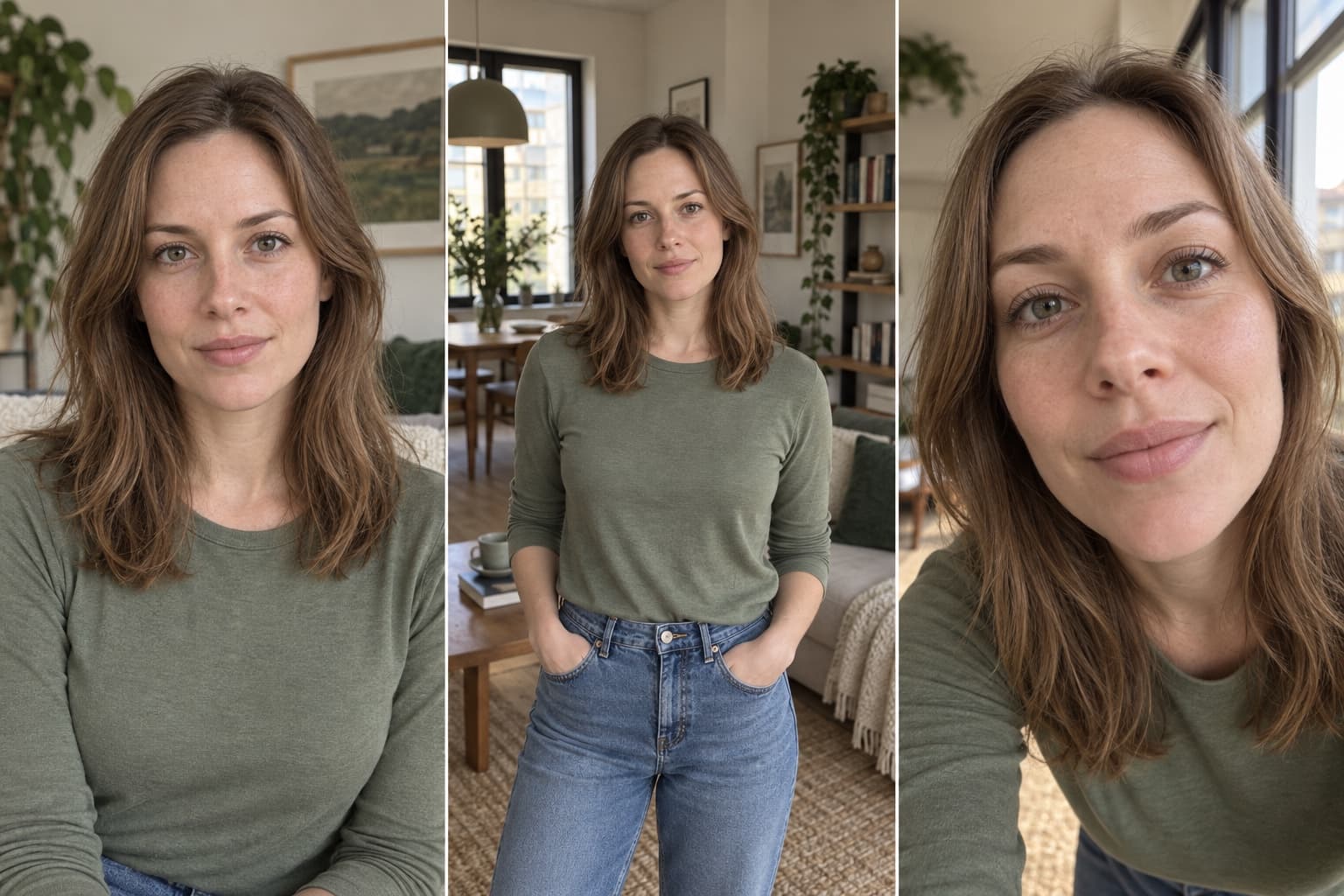
Photo-condition example
Lens distance, angle, light, expression, and framing can shift how the same face appears. A close selfie and a softly lit portrait are different observations, not competing truths.
This example changes camera distance and framing. It is not the controlled Front, Left 45°, and Right 45° capture used to compare structure.
What you get
The free analysis does more than return a number. It shows what the image supports, what changed between views, and whether another photo would add useful evidence.
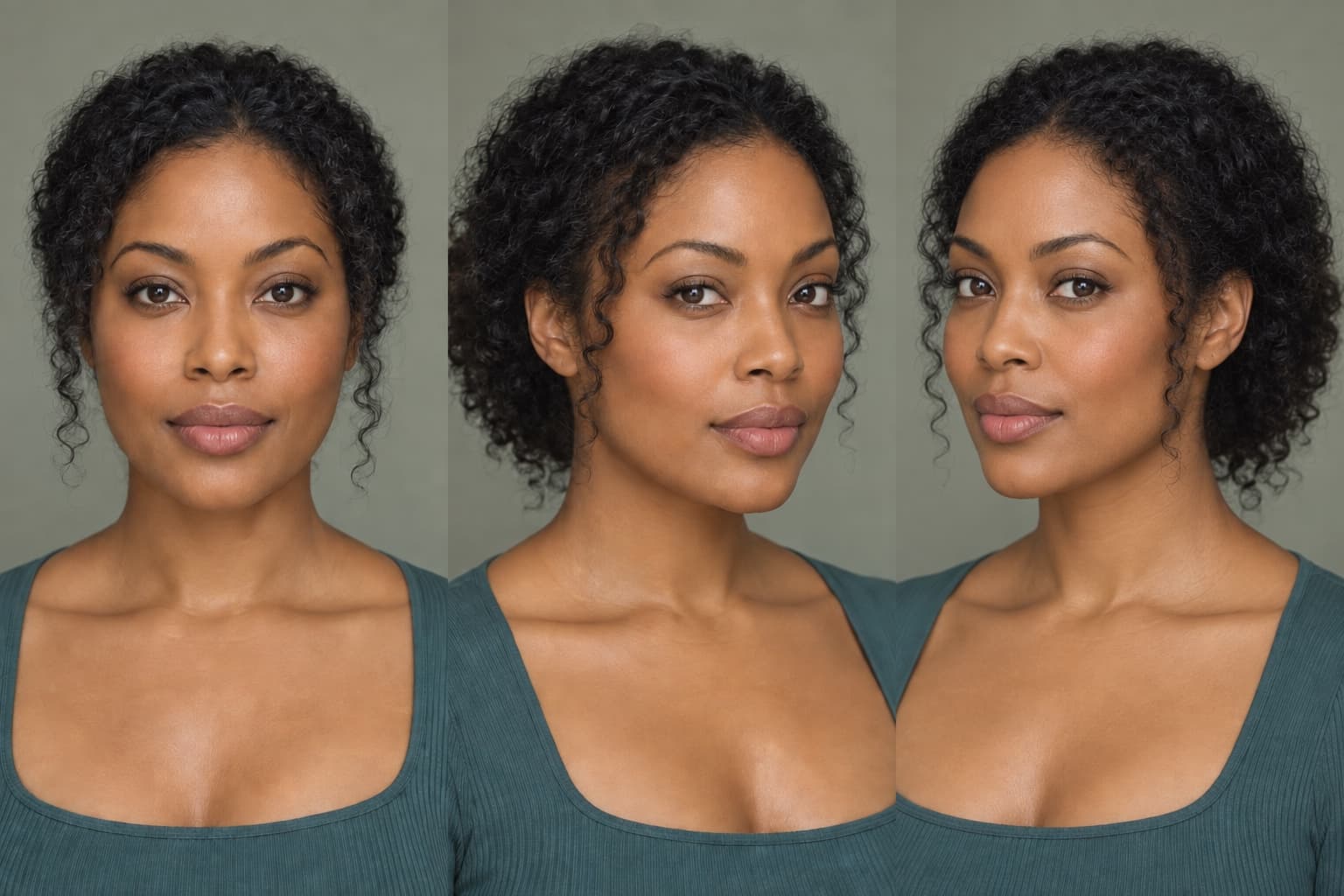
Calculated synthetic example
Product structure preview · not a real-person rating
Structure Score
97.2
Beta estimate from three accepted synthetic views.
LookRange
91.6–100.0
LookRange is the bounded presentation interval supported by the accepted views, not the raw lowest and highest photo scores.
Front photo
97.1
Left view
94.7
Right view
94.1
Next useful step
Review the main variance driver before changing anything. Retake only the weakest view when its evidence is limited.
Check visibility, pose, light, sharpness, and perspective before interpreting a frame.
Add front and controlled angled views to see which observations remain consistent.
Separate the image, relatively stable structure, controllable choices, and confidence.
What the system measures
The analysis is intended to examine visible proportions, symmetry cues, feature relationships, and how those observations change across views. Confidence should fall when the evidence is weak.
Relative distances and feature relationships supported by the image.
Observed balance with natural asymmetry and head pose kept in context.
Changes associated with lens distance, angle, light, crop, and expression.
How strongly validation quality and agreement across views support a claim.
LookRange is not identity recognition, medical advice, personality inference, or a measure of personal worth.
Optional deeper guidance
Full LookRange Analysis is an optional one-time $9.99 explanation report offered only when Checkout is configured, and only after the free three-view result. It adds depth to the explanation rather than accuracy to the score. When available, it adds deeper evidence, selected hair, brow, makeup, eyewear, or facial-hair guidance, three prioritized actions, and a controlled retest plan.
Full LookRange Analysis
$9.99
One-time purchase after the complete free result.
Quick Scan accepts a photo only inside your browser and processes it in memory on the device. The photo is not uploaded, persisted, or used for training. Any future server upload must have a stated purpose, consent boundary, retention period, and deletion path.
Read the privacy approachStart with the free AI face analyzer for a private Quick Scan, then add controlled views for the complete free LookRange result.
For a different question, open the free AI attractiveness test, read how a face rating should be qualified, review facial harmony, understand LookRange, or inspect the method and evidence or preview the full LookRange report sample.
Questions, answered plainly
Yes, on a supported device. Quick Scan and the complete three-view LookRange are free, with no account required. Selected JPEG, PNG, or WebP photos are processed locally in your browser and are not uploaded.
No. It is designed to describe visible patterns, photo variation, and uncertainty. It cannot define beauty or personal value.
Full LookRange Analysis is an optional one-time $9.99 explanation report offered only when Checkout is configured, and only after the free three-view result. It adds depth to the explanation rather than accuracy to the score. It is available only as a one-time purchase.
Quick Scan runs locally and keeps the selected photo on the device. Any future training use would require separate, explicit consent.